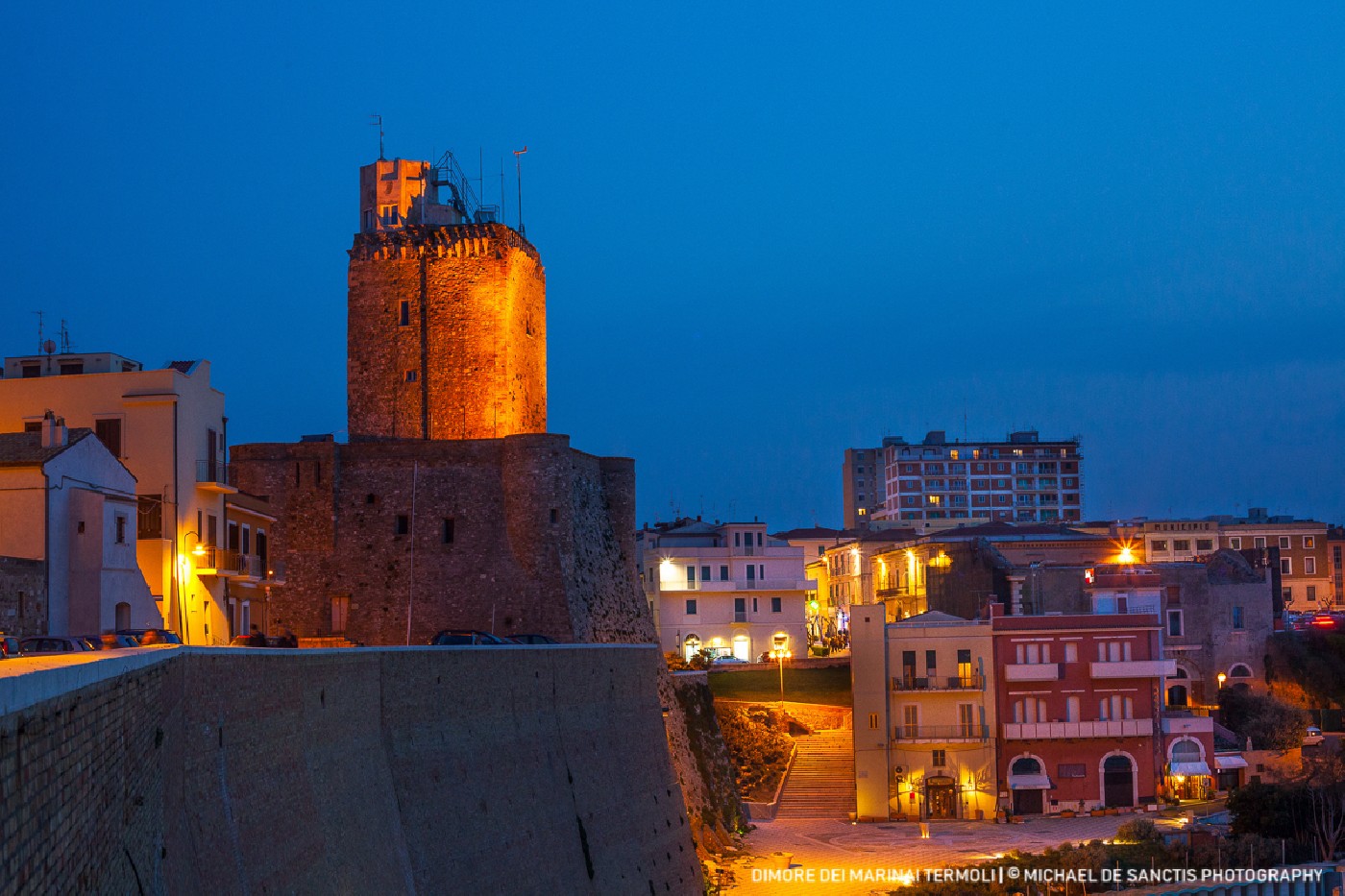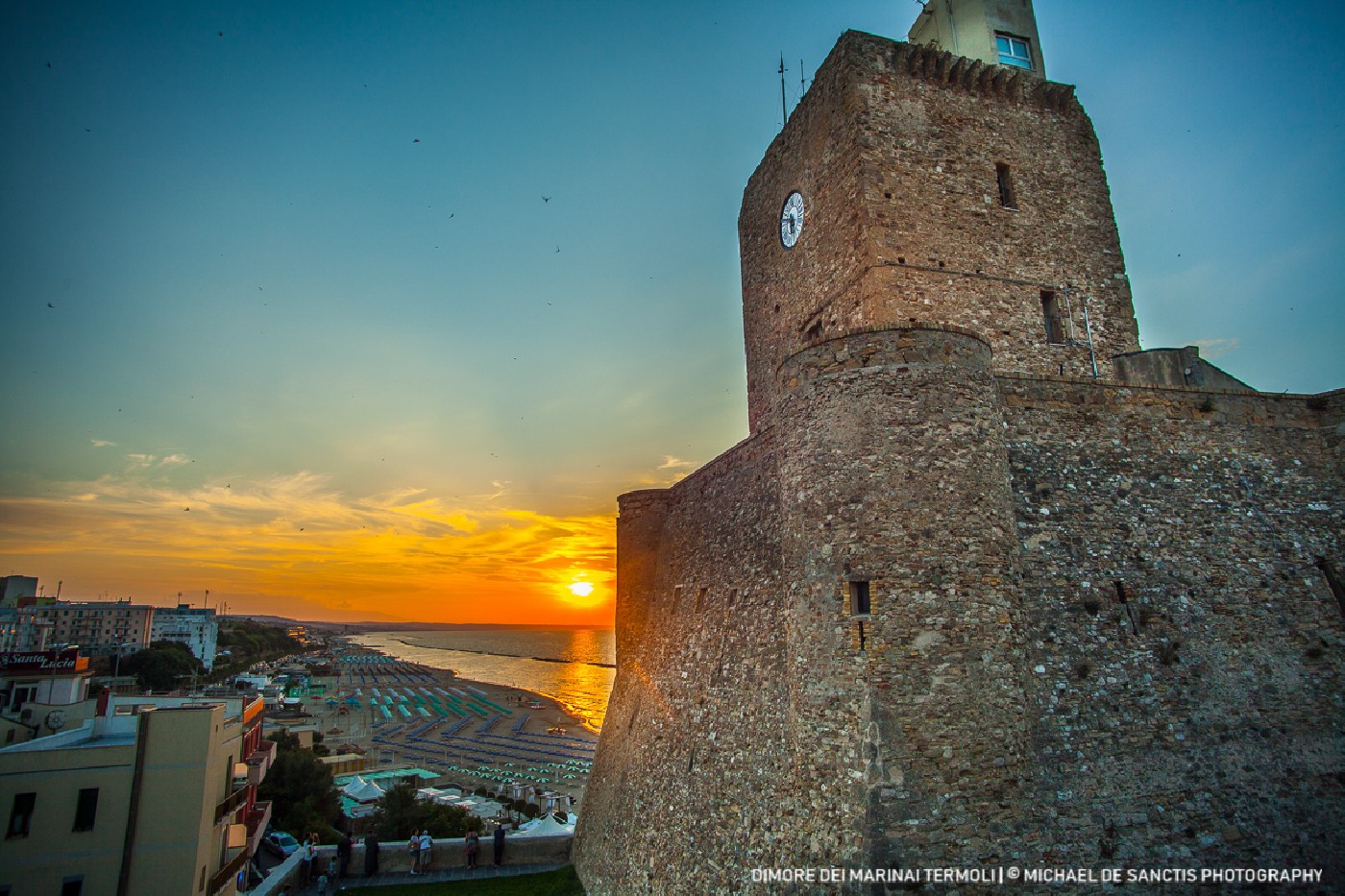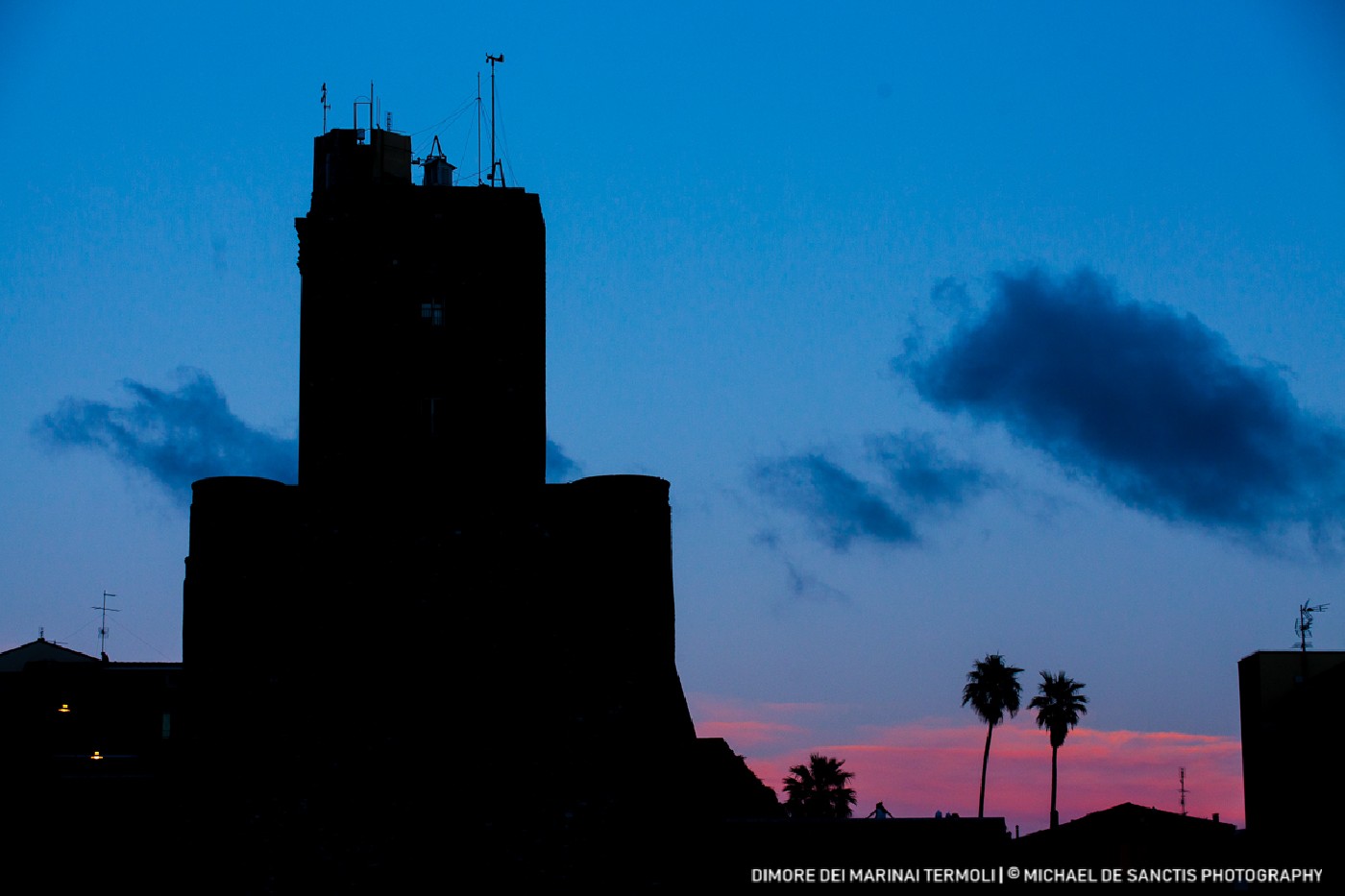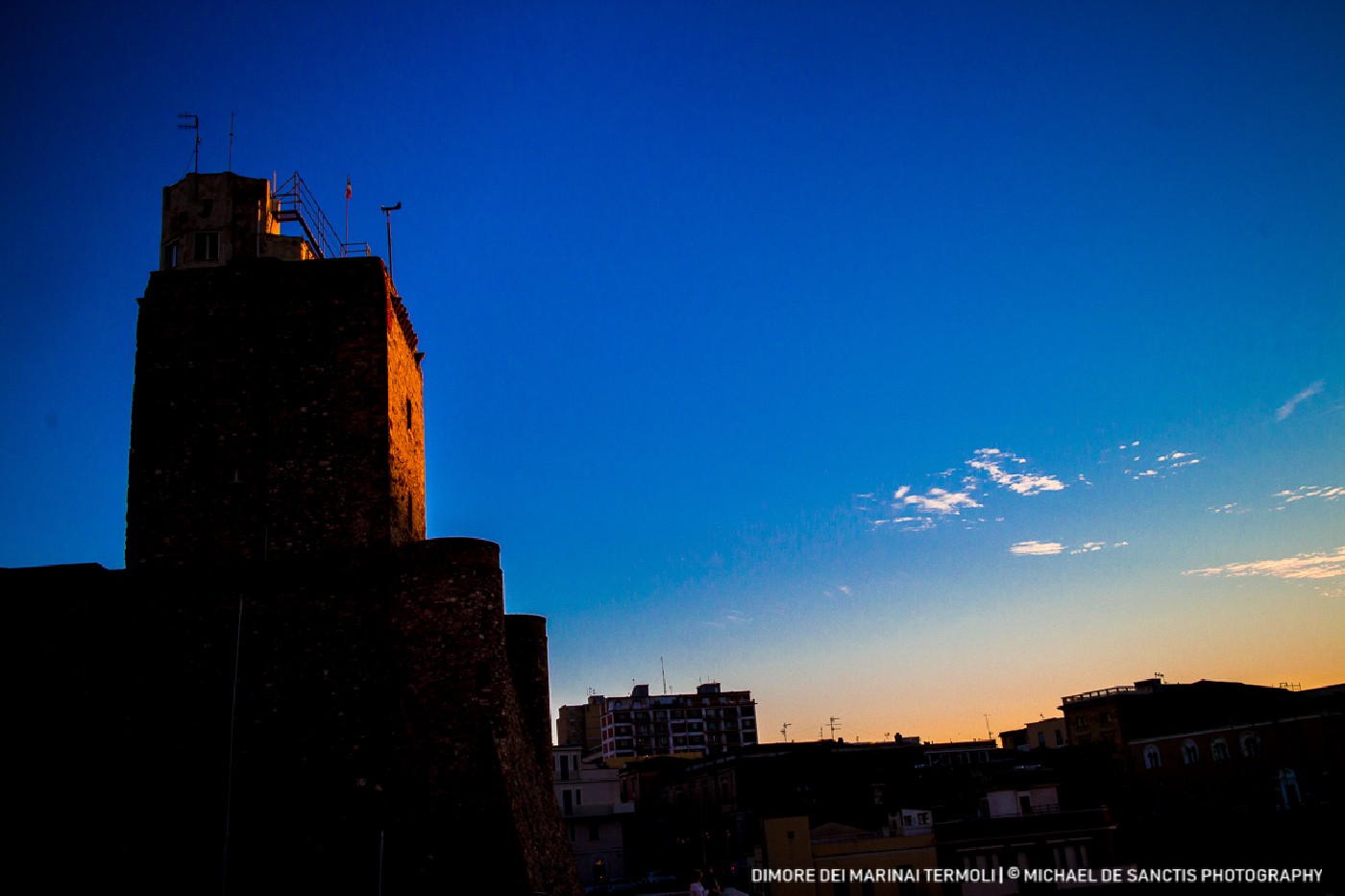
The Swabian castle of Termoli is located near one of the two entrances to the Borgo. Given its grandeur and its position, its profile characterizes the image of the city. Its construction is attested approximately around the 13th century, a period in which Frederick II of Swabia designed a system of fortification for the borders of the south-eastern area of the Italian coast up to Sicily. In that era, the original building was most likely transformed into a regular plan typical of the Swabian period. The Castle consists of a tower resting on a truncated square pyramid base. On the four corners of the base, four projecting cylindrical towers are grafted. The structure develops mainly in height on the north side, close to the sea. This, together with other architectural elements, indicates that the castle served as a lookout post but, above all, a defensive one. The portal was protected by a drawbridge and a moat that extended along the north-east side. The lower part of the castle, which lies on a level slightly higher than the current street level, functioned as a warehouse and storage area. It consists of four large rooms with a rectangular plan and barrel vaulting that develop around the structure from the Norman period. Currently, a modern staircase connects the ground floor rooms with those on the first floor; in ancient times, this function was performed by wooden structures. The upper part of the castle was used for storage and dwelling but, above all, had a defensive role. The rooms on the first floor are, in fact, called the "Corridor of the Archers." They all have a rectangular plan, are covered by barrel vaults, and are characterized by numerous arrow slits that allowed archers and crossbowmen to strike enemies from above. The circular turrets open onto this floor, and here, originally, the only access to the castle was located on the north-east side, where the corbels used for sliding the ropes and winches of the drawbridge are still visible. The terrace of the castle's upper body still preserves stone corbels once intended to support equipment and mobile scaffolding for vertical fire. The castle, considered in the Swabian era the last outpost of Apulia, underwent various structural modifications over the centuries. With the advent of firearms, the arrow slits were partially transformed into loopholes for harquebuses. During recent works, a cannon emplacement was discovered in the lower part of the belvedere tower, at the level of the cliff, which was meant to ensure coverage of the western wall. When the castle lost its defensive function, the same arrow slits underwent a further transformation and became windows. Of particular interest are some charcoal inscriptions dating back to the 18th century, found in the lower halls of the castle, which were used as a prison at that time. These consist of names, dates, and in some cases, the reasons for imprisonment. On the south-east wall, one reads "upon entering... I killed." In 1902, the Swabian Castle became a national monument, and in 1909, the Navy placed a weather station on the highest part of the building. Today, the castle's halls are used for exhibitions and musical events, and the ancient walls often serve as a backdrop for civil weddings.